
Taking care
The quiet art of tending what we love

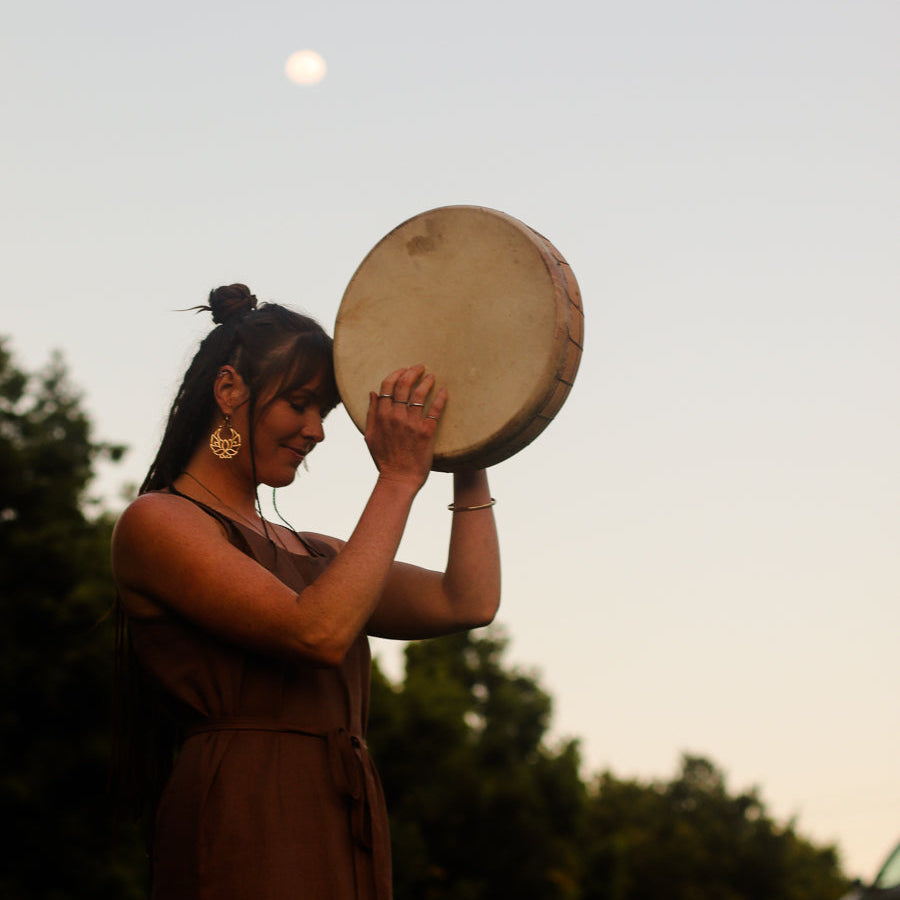
Wear what you love. Wear it fully.
Care for it well
Clothing is made to be worn.
Made to move with us through ordinary days and extraordinary ones. Made to soften with use, carry traces of our lives and, eventually, to show its age and be laid to rest.
I believe there is something beautiful in this.
Rather than preserving our favourite garments for another day, I believe in wearing what we love — celebrating the season we are living — and then tending to those pieces with care so that they may accompany us for as long as possible.
Unfortunately, even good clothing will not last forever.
But thoughtfully made garments, consciously cared for and mended when necessary, can live long and beautiful lives.
Care is a sacred part of the wearing.
Wear what you love.
Wear it fully.
Care for it well.
Make time for mending.
And accept that, like all things,
our clothing has a life cycle.
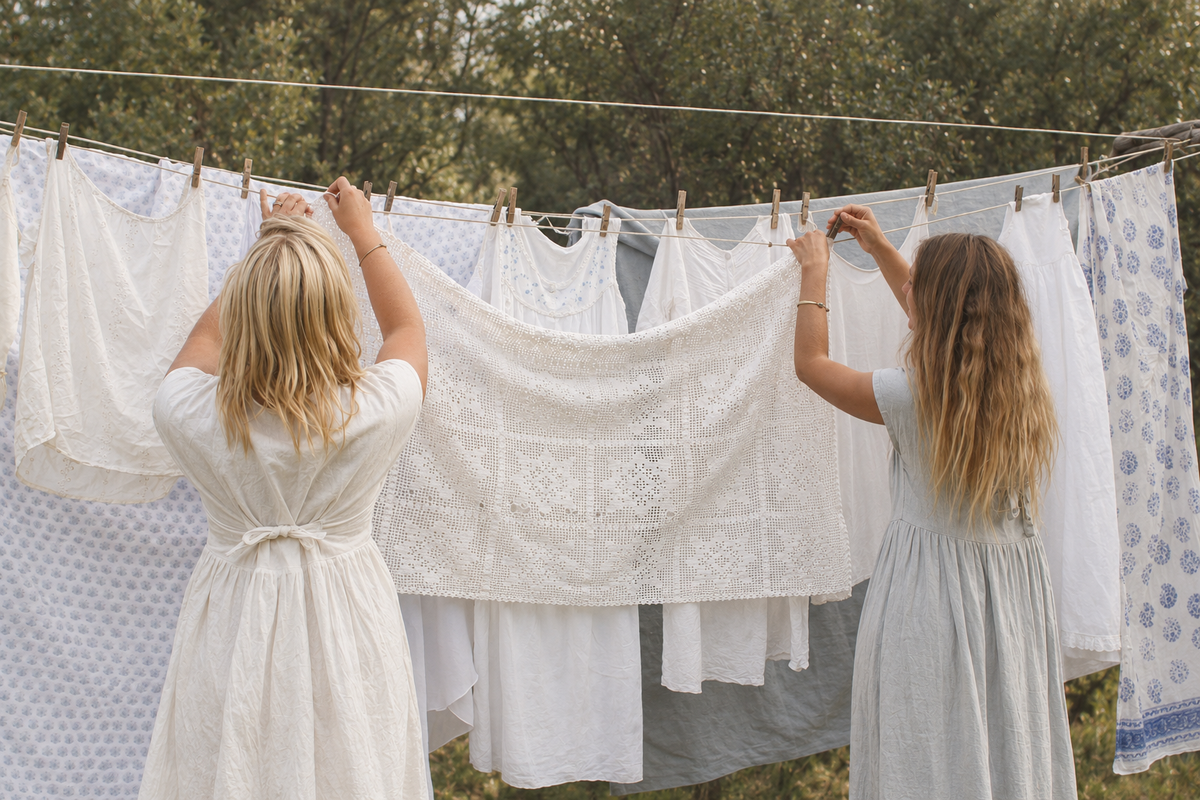
A little care goes a long way
THE RITUAL ART OF WASHING
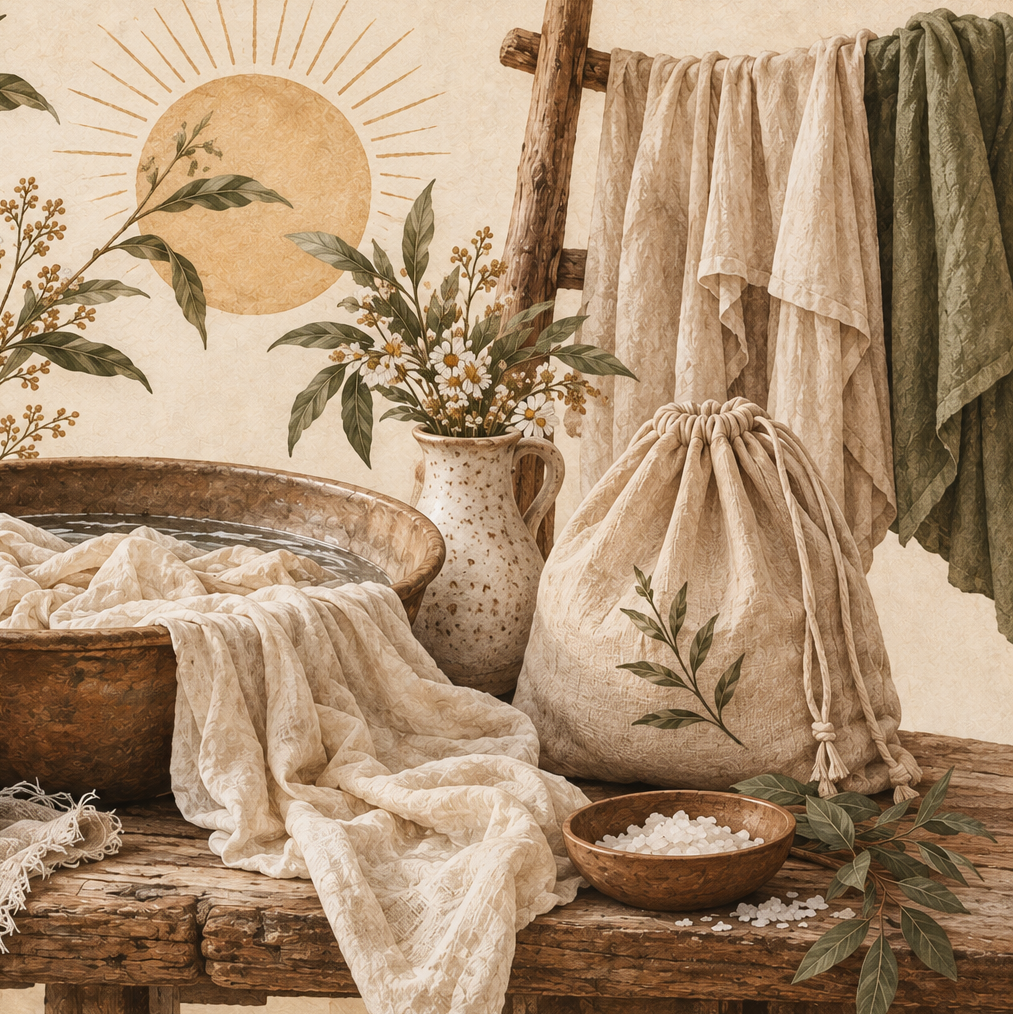
Every maiden mother crone garment arrives in a handmade drawstring bag, created from the fabric off-cuts of our production process.
This bag is not only packaging. It is designed to become part of the ongoing care of your garment.
Before washing, gently place your garment inside its bag and close the drawstrings.
This simple practice helps protect delicate ties, buttons and fabric from unnecessary pulling, stretching and friction during the wash.
Wash gently, at a low temperature, with similar colours and a mild, natural laundry detergent.
Where possible, allow your garment to dry naturally in the fresh air.
Naturally dyed and eco-printed garments ask for a little extra care.
Hand washing is recommended to help preserve their botanical colours and impressions.
After washing, gently reshape and allow to air-dry in the shade or soft, indirect light, as prolonged exposure to strong sunlight can cause natural dyes to fade more quickly.
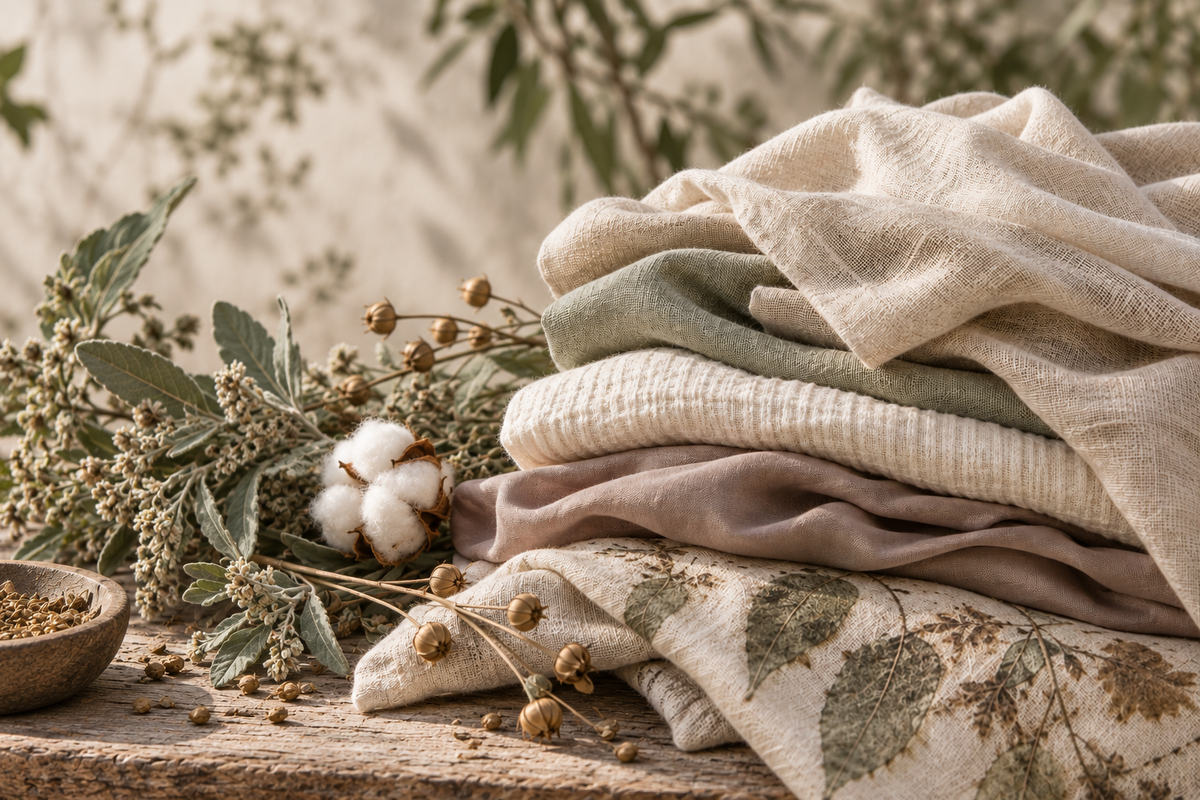
Different fibres ask for different care
Know your fabric
Every cloth has its own nature.
Understanding the fibres we wear — how they soften, move, age and respond to washing — allows us to care for them well and enjoy their beauty for longer.
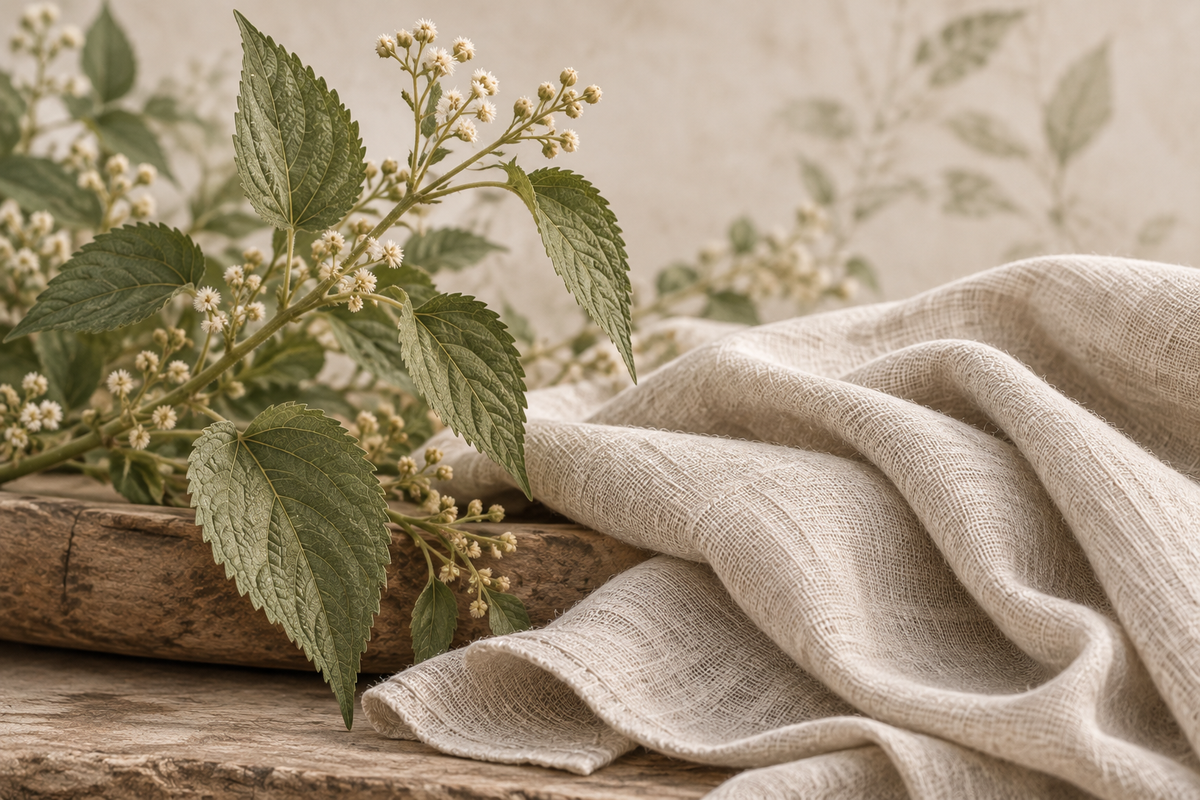
Ramie
Ramie is an ancient plant fibre made from the stalks of the ramie plant, a member of the nettle family. Naturally strong and breathable, it has a beautiful, slightly textured character and becomes increasingly soft and supple with wear.
Taking care — Gentle washing and natural drying will help preserve its texture and shape. Over time, ramie will continue to soften, becoming more beautiful and comfortable the more it is lived in.
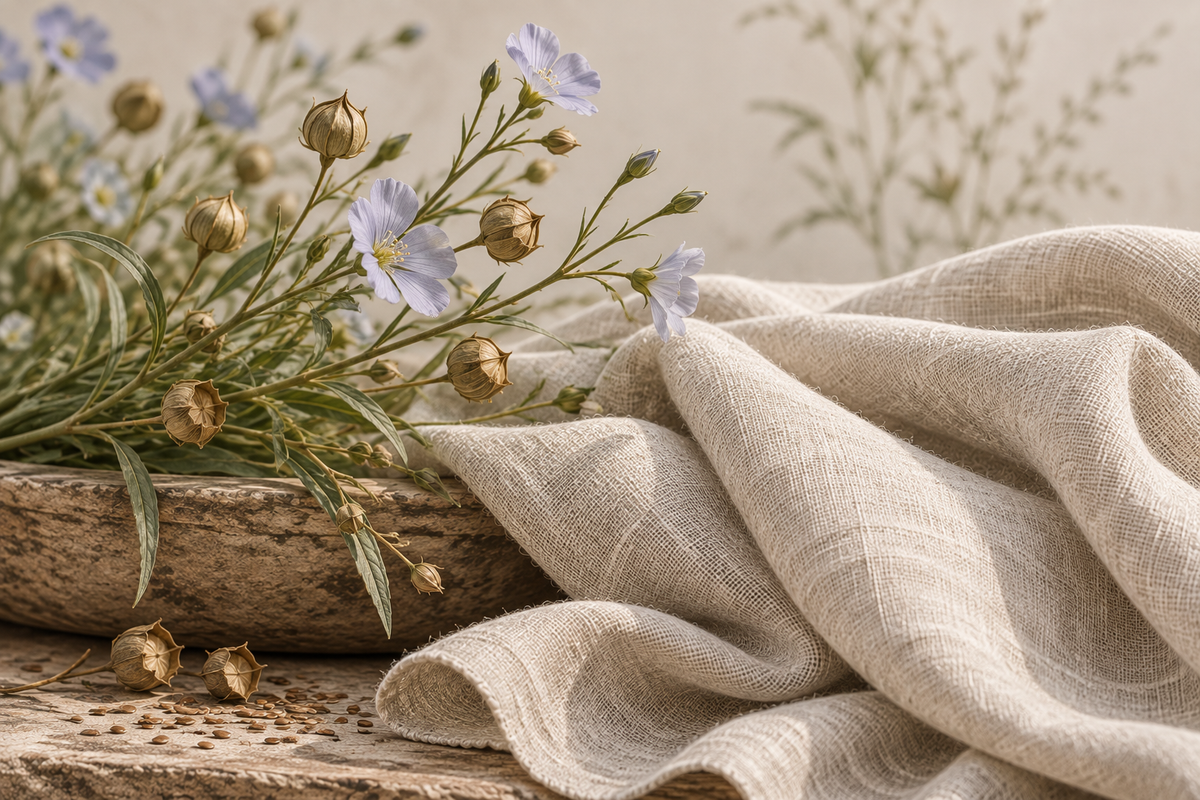
Linen
Linen is woven from the fibres of the flax plant —
a slender flowering plant cultivated for thousands of years. Strong, breathable and beautifully tactile, linen carries a natural texture that softens and becomes increasingly supple with time.
Taking care — Wash gently at a low temperature and avoid excessive heat when drying. Linen is made to soften and relax with wear — its natural creasing and evolving texture are simply part of the character and beauty of the cloth.
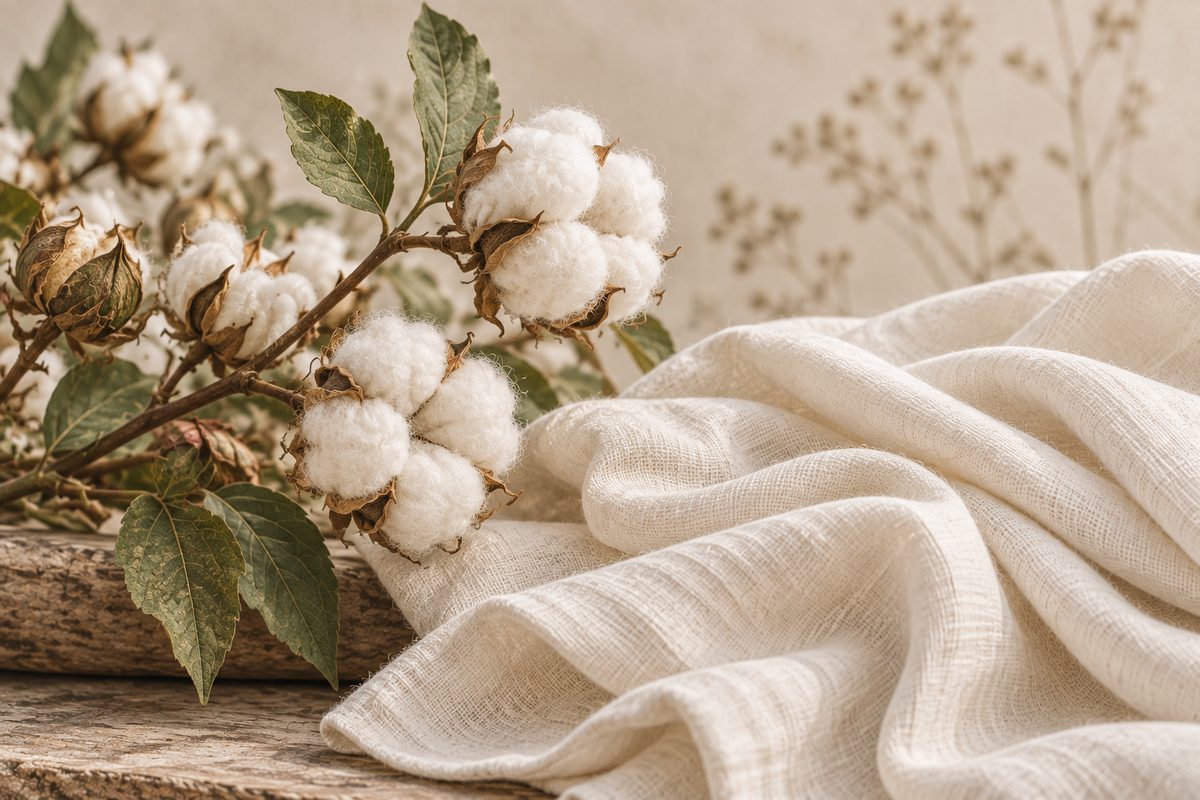
Cotton
Cotton is a soft natural fibre gathered from the seed pods of the cotton plant. Breathable, comfortable and beautifully versatile, it creates cloth that is both gentle against the skin and wonderfully suited to everyday wear.
Taking care — Wash gently at a low temperature with similar colours. Cool washing helps preserve the fibres while reducing unnecessary shrinkage and fading. Allow to dry naturally where possible, avoiding excessive heat so that the cloth may retain its softness and shape for longer.
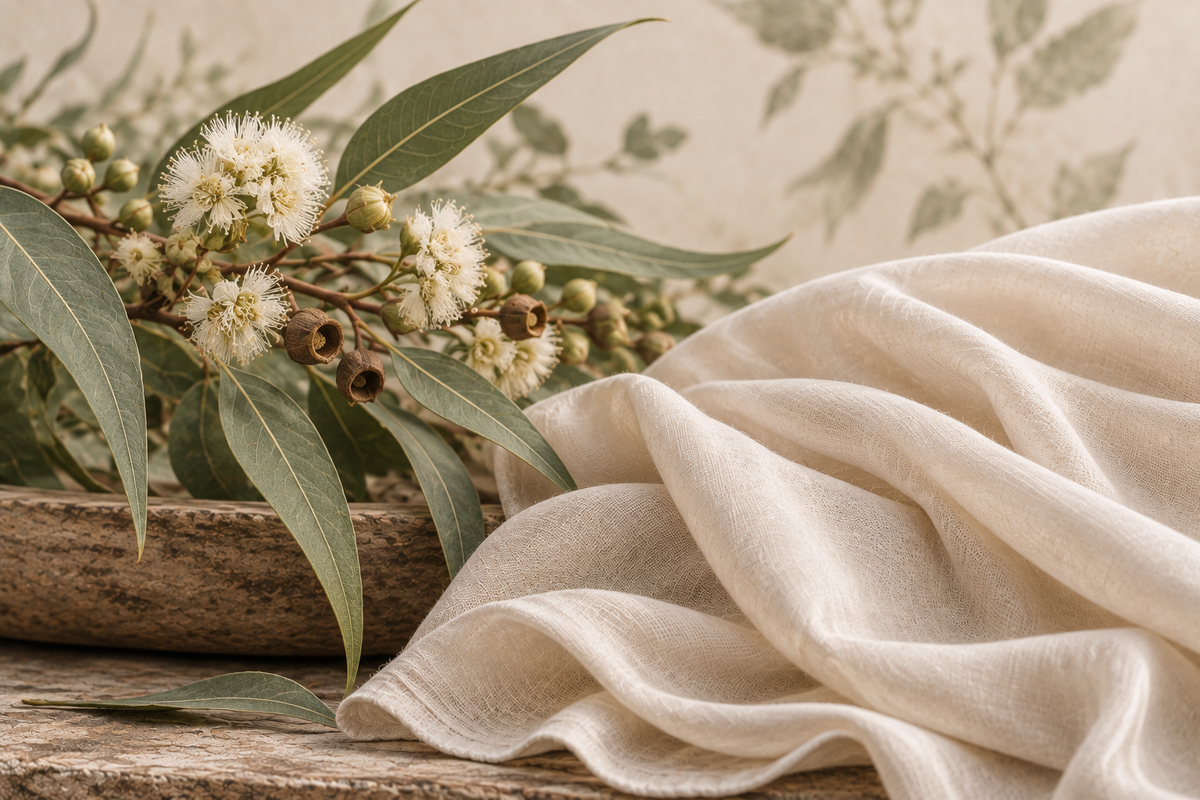
Viscose
Viscose is a soft, flowing fibre made from cellulose derived from plant material, most commonly wood pulp. Known for its beautiful drape, breathability and silky softness against the skin, viscose creates light weight garments that move with wonderful fluidity and ease.
Taking care — Viscose asks for a little tenderness, particularly when wet, when the fibres are more vulnerable to stretching and distortion. Wash gently at a low temperature inside your garment bag, avoiding twisting or wringing. Reshape with care while damp and allow to dry naturally.
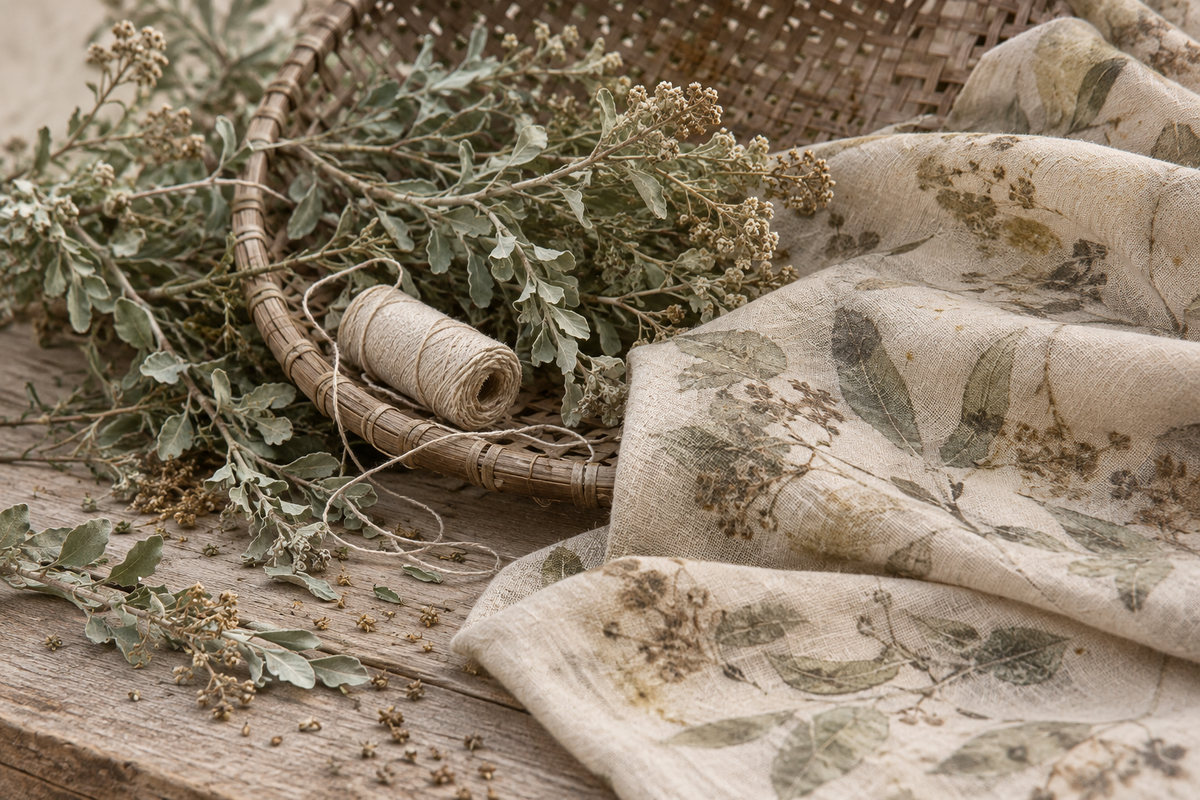
Eco printed and hand dyed
These pieces carry the colours and impressions of the natural world — created with leaves, flowers and other plant materials through the slow processes of eco printing and natural dyeing. Each cloth is unique, its colour shaped by the particular meeting of plant, fibre, water, heat and time.
Taking care — Wash only when necessary, using a gentle, pH-neutral detergent and cool water. Avoid bleach, harsh stain treatments and prolonged direct sunlight, allowing your garment to dry naturally in the shade. Botanical colours may gently soften and evolve with time — a natural part of the life and beauty of the cloth.
STAINS AND MENDING
Remaining in relationship with what we love
A stain does not necessarily mean the end of a garment, nor does a small tear.
Attend to stains gently and as soon as possible, beginning with the least invasive treatment.
Avoid vigorous rubbing, harsh bleach and aggressive chemical stain removers — particularly on natural dyes and delicate fibres.
And when cloth eventually thins, a seam opens or a button comes loose, consider mending before replacing.
A garment that has been repaired carries evidence that it was worth caring for.
Wear - love - tend - mend - repeat
A culture of care
Perhaps caring for our clothing is one small way of remembering how to care for things again.
To buy less.
To choose well.
To use what we have.
To repair rather than immediately replace.
To allow something to become worn without believing it has become worthless.
The garments I make are not intended to remain untouched or pristine. They are made to enter a life.
Wear them. Love them. Tend them. Mend them.
And when, after many seasons, they finally reach the end of their usefulness, let them return gently to the Earth wherever the nature of the cloth allows.
Proudly South African
Designed & made with care
on the Garden Route
Women Empowerment
Women supporting women,
through meaningful, ongoing work
Created Slowly
Small-batch garments lovingly made
in rhythm with motherhood & life

Sacred wear
Created with reverence for the body,
the maker and the living Earth